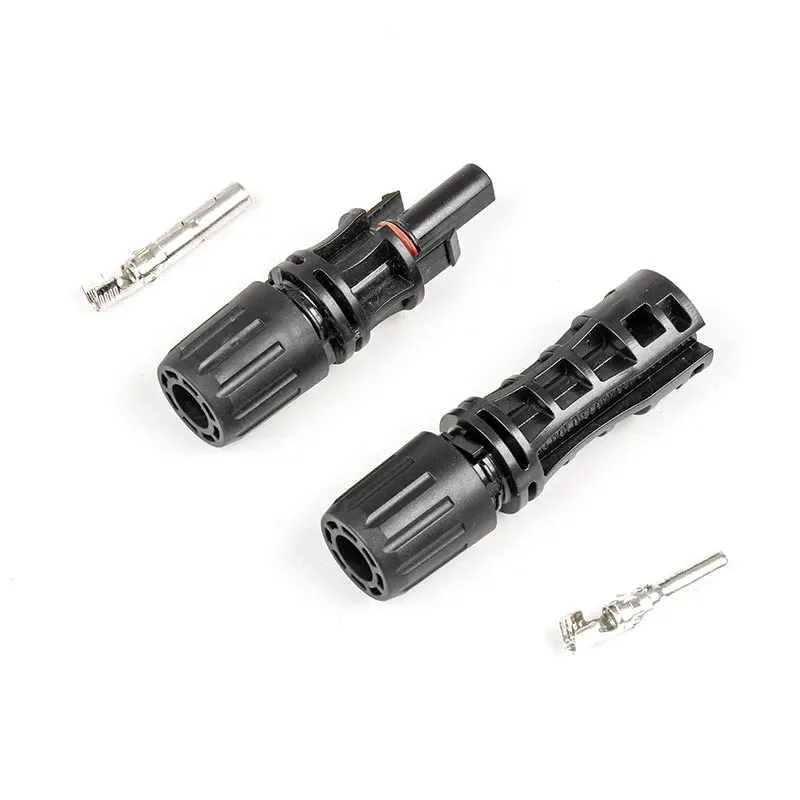
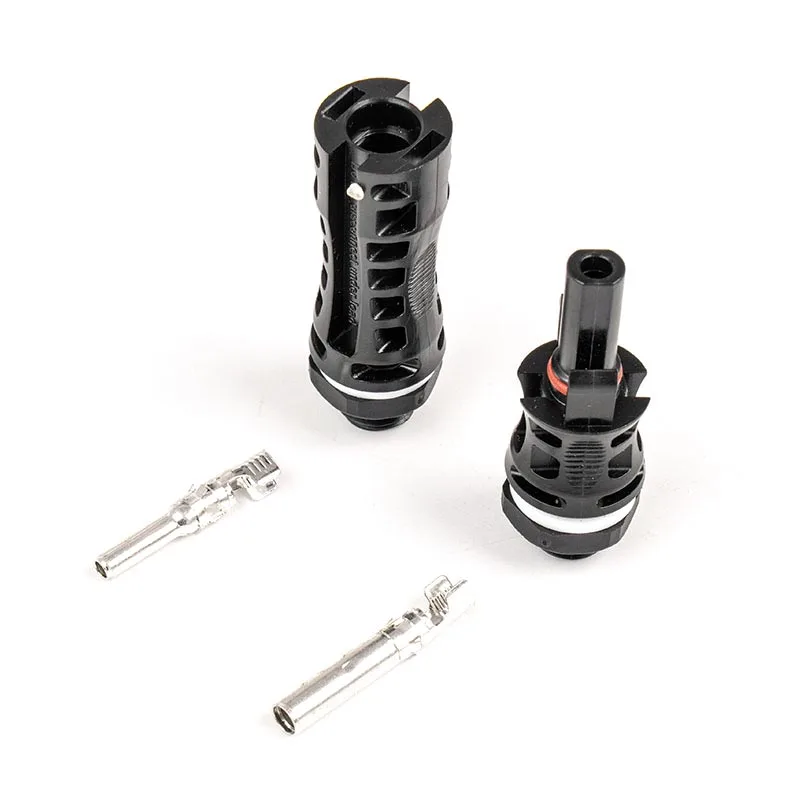
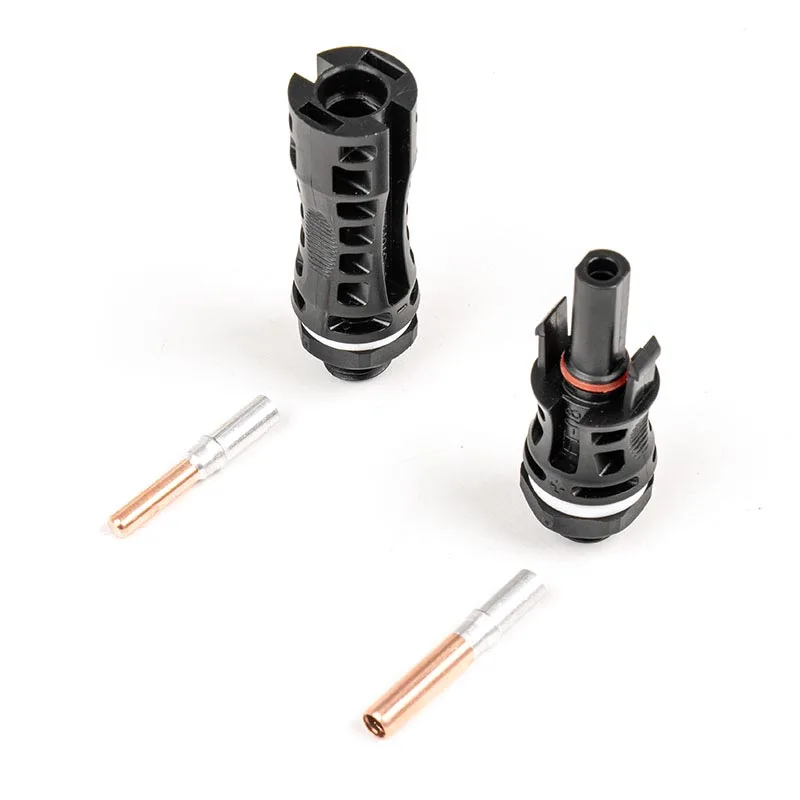
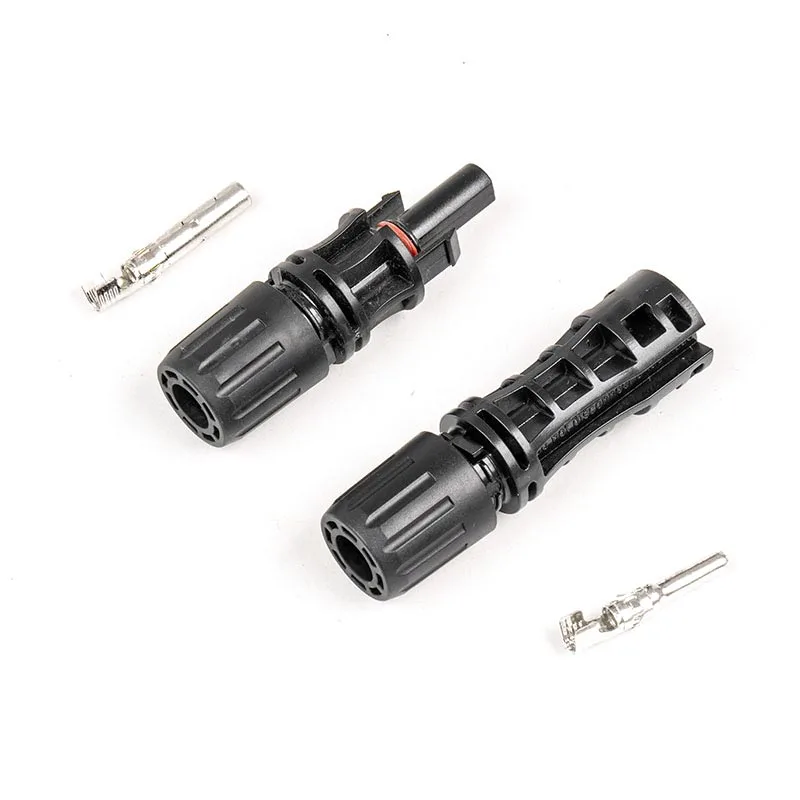
A solar panel connector is the electrical bridge that ensures stable, low-loss, weather-resistant transmission between photovoltaic modules, inverters, combiner boxes, and other system components. As PV installations expand in scale and efficiency, connector performance has become one of the decisive factors affecting system safety, current flow stability, and long-term output.
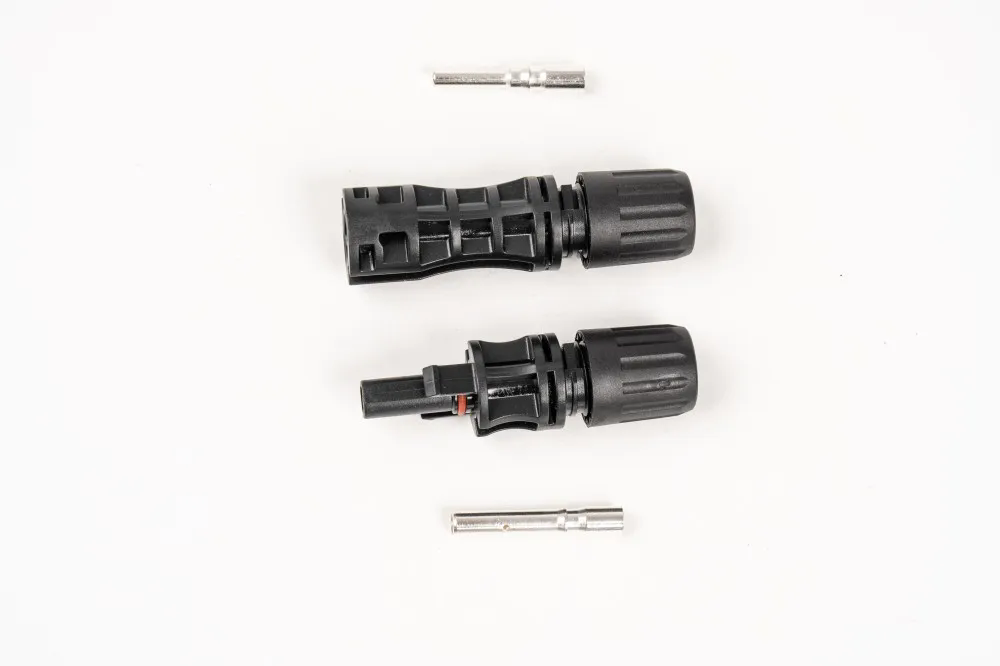
Solar connector performance is defined by several measurable parameters. The following table summarizes standard professional-grade specifications commonly required in modern PV systems:
| Parameter | Typical Professional Specification | Description |
|---|---|---|
| Rated Current | 30A–60A | Supports high-output modules and array combinations |
| Rated Voltage | 1000V–1500V DC | Suitable for commercial and utility-scale systems |
| Contact Resistance | ≤ 0.3 mΩ | Ensures minimal power loss and stable long-term conductivity |
| Temperature Range | −40°C to +85°C | Enables performance in extreme climates |
| Protection Class | IP67 / IP68 | Prevents water and dust intrusion during rain, cleaning, and storms |
| Insulation Material | PPO / PC / Flame-retardant engineering plastics | Offers UV resistance and long-life outdoor durability |
| Locking System | Snap-fit self-locking with anti-loosening structure | Prevents accidental disconnection |
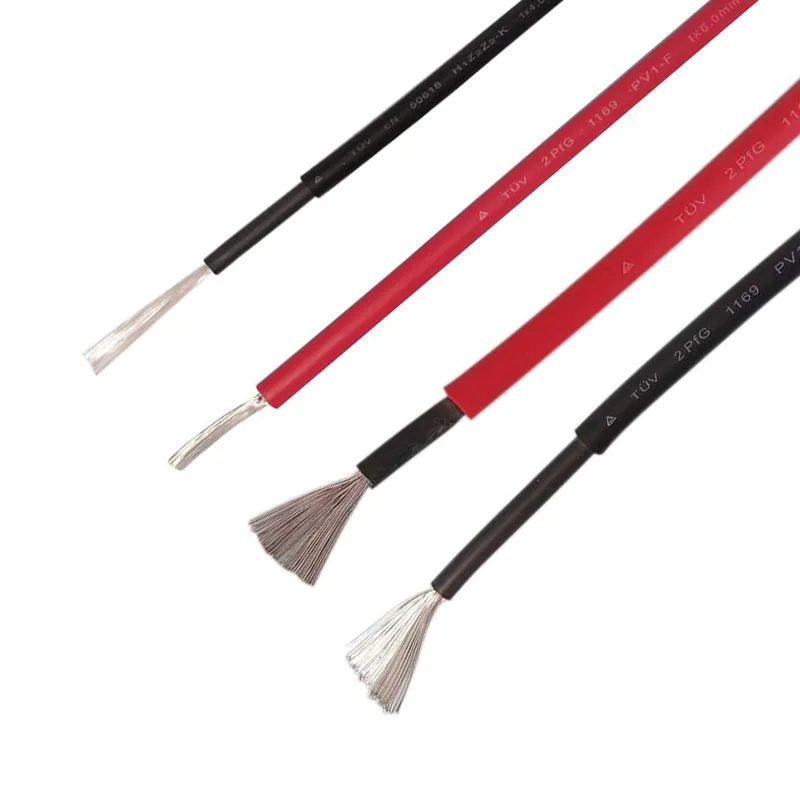
| Cable Compatibility | 2.5mm² / 4mm² / 6mm² | Wide range to support different current levels |
| Flame Rating | UL94-V0 | Ensures fire safety under thermal stress |
| UV Resistance | High-level anti-UV polymer | Prevents cracking and degradation under sunlight |
| Certification | TUV, UL, CE | Indicates conformity to global electrical standards |
These parameters collectively determine whether a connector ensures long-term safety, low heat generation, and stable energy transfer in photovoltaic environments.
The connector serves as the transmission point for continuous direct current (DC). Even a slight increase in resistance at this point can generate excessive heat, accelerate material degradation, and reduce module efficiency. A well-engineered connector minimizes resistance, increasing overall energy yield over the system’s operational life.
Solar installations frequently operate in harsh climates—deserts, humid coasts, high-altitude stations, and cold regions. High-grade connectors use multi-layer sealing rings, locking caps, and UV-resistant housing to avoid moisture penetration, corrosion, salt-spray interference, and thermal-induced expansion or contraction.
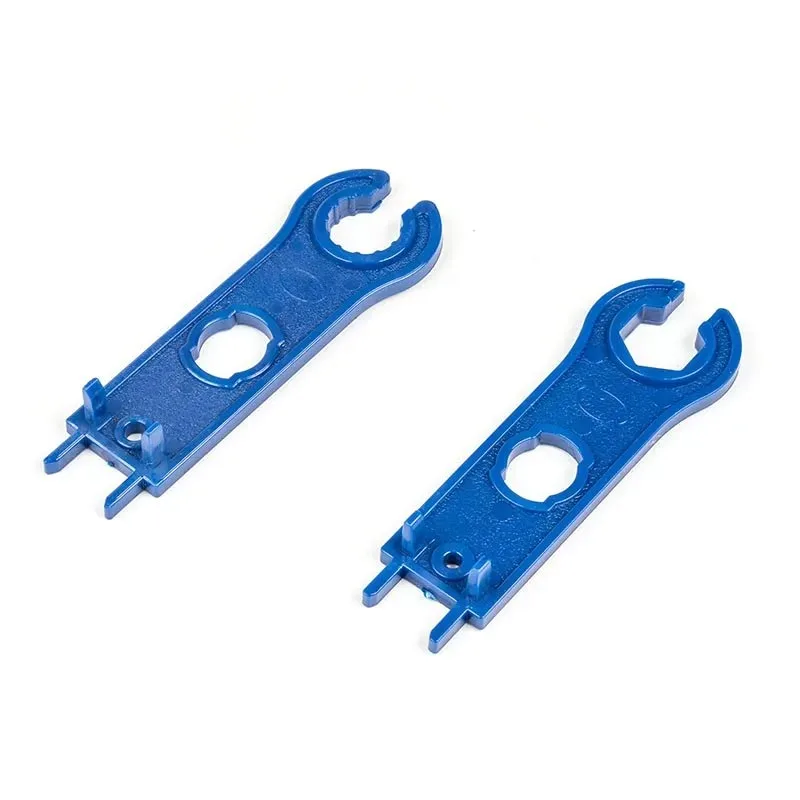
Strong winds, vibration, and cable movement can cause poorly designed connectors to loosen, leading to electrical arcs or short circuits. Modern connectors adopt reinforced locking clips that require specialized tools to detach, ensuring safety and compliance with global installation standards.
Next-generation solar farms increasingly operate at 1500V DC to reduce transmission losses and balance-of-system costs. Connectors must handle higher insulation voltages and strict testing against partial discharge and arc-fault risks.
The rise of half-cell, bifacial, and large-format modules increases current outputs. Connectors must maintain safe temperatures even under heavier loads during peak sunlight hours.
Manufacturers are integrating automated crimping, smart QC sensors, and robotics to ensure precise conductor-to-pin contact. This reduces human error and ensures consistency across large batch production.
Eco-friendly, halogen-free polymers and improved metal alloys support longer lifespans and simplified end-of-life recycling—aligning with global sustainability goals.
Different arrays require connectors that support specific current and voltage combinations. Undersized connectors risk overheating and premature failure.
Using cables of incorrect diameter can affect contact stability. Always match the connector with the intended PV cable gauge.
Connectors that meet TUV, UL, or IEC standards ensure reliable performance. Lifespan testing includes pull-force testing, salt-spray exposure, wet-insulation resistance, and thermal cycling.
Reliable connectors offer clear polarity markings, ergonomic locking features, and compatibility with standard crimping tools. This reduces installation time and error potential.
Q1: What causes overheating in solar panel connectors?
A1: Overheating typically results from poor crimp quality, incompatible cable diameters, high contact resistance, exposure to excessive current, or degraded sealing that allows moisture intrusion. Premium connectors use low-resistance metal alloys, precise crimping standards, and multi-stage sealing rings to avoid thermal buildup, ensuring stable energy transfer throughout the product lifecycle.
Q2: How often should solar panel connectors be inspected?
A2: Inspection frequency depends on environmental conditions and system load. In general, connectors in residential systems are checked annually, while those in commercial or utility-scale systems may require semi-annual inspections. The inspection should include checking for discoloration, cracking, loose locking clips, moisture traces, and abnormal temperature rises during operation.
The global transition to renewable energy is escalating the need for robust, stable, and long-lasting photovoltaic components. As solar installations become more powerful and widespread, connector technology must evolve to meet higher electrical demands, enhanced fire-safety expectations, and stricter environmental durability standards. The combination of high amperage modules, smart inverters, microgrid structures, and hybrid storage solutions makes connector reliability more essential than ever.
Manufacturers are advancing toward lower-resistance contact metals, improved temperature-proof housings, and redesigned locking structures that support automated assembly. These innovations ensure that connectors remain capable of supporting PV systems for 25–30 years with minimal maintenance. High-performance solar connectors are positioned to become one of the foundational elements enabling global renewable energy expansion, reducing system downtime, enhancing long-term efficiency, and supporting the world’s shift toward sustainable electricity.
High-quality solar panel connectors determine the stability, reliability, and long-term efficiency of photovoltaic systems. Their performance shapes how effectively solar modules deliver power under extreme temperatures, prolonged UV exposure, heavy current loads, and challenging outdoor environments. As global PV installations continue to scale, connector technology will remain a crucial contributor to system safety and energy yield. For organizations seeking dependable, high-specification solutions for professional solar applications, products engineered by Ningbo Dsola New Energy Technical Co., Ltd. provide advanced materials, precision manufacturing, and long-life durability suitable for modern renewable-energy projects.
For technical specifications, customization needs, or project procurement inquiries, contact us to receive professional assistance and tailored solutions.